
MAKHAMBET UTEMISULY’S DOMBYRA
Описание
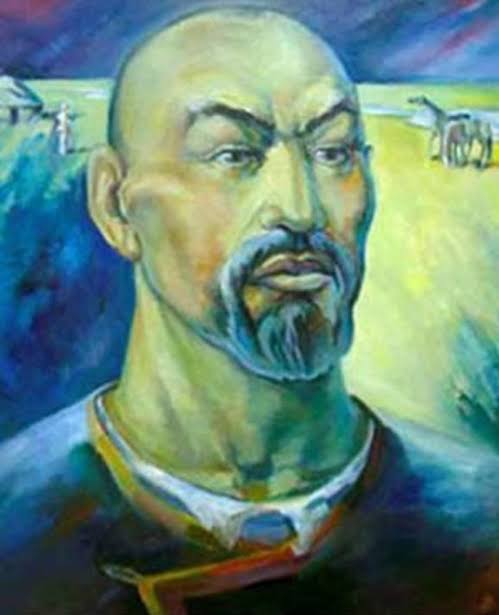
рoet, kuishi -composer and warrior
Master craftsman: Dina Quspanova
The original of this dombra was donated to the museum collection by Mustafa Ismagulov in 1981, when the Ykylas Museum was established.
The dombra preserved at the Ykylas Museum of Folk Musical Instruments is a replica of the oldest known dombra associated with Makhambet Utemisuly. The original instrument, which accompanied the heroic poet and warrior during his military campaigns, was once in the possession of the renowned musician Arystan Batalov.
After his death, in 1931, his elder brother Katep brought the dombra to Kyzylorda. Following Katep’s death, his relatives moved to Russia and took the instrument with them. When the kuyshi Seitek Orazalyuly deliberately went in search of the dombra, he discovered that it had been taken to Russia.
The instrument subsequently passed from one owner to another. In 1974, it came into the possession of an elderly man named Eleu, who kept it in his home for many years. After Eleu’s death, his descendants returned the valuable historical artifact to Kazakhstan. In 1981, Mustafa Ismagulov, a collector and researcher of Kazakh cultural heritage, brought the instrument to the museum and donated it to its collection.
Although the body of the dombra has remained intact, its soundboard has been replaced. Today, this ancient and valuable artifact is preserved at the Ykylas Museum of Folk Musical Instruments in Almaty.
Makhambet Utemisuly was not only a great poet and warrior but also a skilled kuyshi. In 1982, eleven of his kuy compositions were published in a collection entitled Shashaqty Naiza, Shalqar Kuy (“Tasseled Spear, Resounding Küy”).
The dissemination of Makhambet’s poetry among the people was greatly influenced by such performers and poets as Sh. Zharylgapuly, Kuan the Poet, Kishkene Kobylandy, Kubala, Lukpan, Murat, and Ygylman. In 1908, more than one hundred lines from two of Makhambet’s tolgau poems were first published in Kazan in the collection Murat Aqynnyn Tumаr Qazhy Oglyna Aitqany (“What the Poet Murat Said to Tumar Kazhy’s Son”).
In 1911, excerpts from Makhambet’s tolgau poems were included in the collection Shaiyr Yaki Qazaq Aqyndarynyn Bastı Shygarmalary (“Poets, or the Main Works of Kazakh Poets”), compiled by Gumar Karash (G. Mushtaq) and published in Orenburg.
In 1939, K. Zhumaliyev published a collection of Makhambet’s poems. In 2003, the 200th anniversary of the poet’s birth was commemorated, and a four-volume collection of his works was subsequently published.
Makhambet Utemisuly’s legacy occupies an important place in Kazakh literary and musical heritage, reflecting the close connection between poetry, heroic tradition, and the art of kuy.


1. “Argymak, Seni Saktadym” — Kalamkas Orasheva (1987)
2. Terme “Isatai Muny” — Meiramgul Orasheva
3. “Karshyga Degen Bir Kus Bar” — Kalamkas Orasheva (1987)
4. “Makhambet’s Tolgau” — Bakir Tazhibayev (1971)
5. “Taimannyn Uly Isatai” — Yrysty Suleimenova
6. Makhambet’s Kui “Zhaiyk Asu” — Kanash Imanbayev
7. Makhambet’s Kui “Zhauga Shapkan” — Karshyga Akhmediyarov
8. Makhambet’s Kui “Zhoryk” — Kanash Imanbayev
9. Makhambet’s Kui “Zhumyr Kylysh” — Karshyga Akhmediyarov (1979)
10. Makhambet’s Kui “Isataidyn Aktabany-ai” — Kanash Imanbayev
11. Makhambet’s Kui “Kiyl Kyrgyny” — Karshyga Akhmediyarov