
KURMANGAZY SAGYRBAIULY’S DOMBYRA
Описание
Folk composer and kuishi (traditional instrumentalist)
Master craftsman: Yedige Nabiev
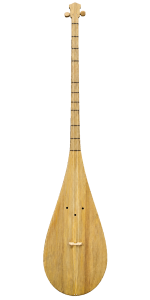 When it comes to the art of Western Kazakh tokpe kuy (improvisational instrumental music), the name that is mentioned first is undoubtedly that of Kurmangazy Sagyrbayuly. In anticipation of the large-scale celebration of the 200th anniversary of Kurmangazy Sagyrbayuly, the legendary master of kuy, whose anniversary was included in UNESCO’s Calendar of Anniversaries for 2018–2019, musician and skilled dombra maker Edige Nabiyev created a replica of Kurmangazy’s dombra and presented it to the collection of the West Kazakhstan Regional Museum of History and Local Lore.
The original dombra that was touched and played by Kurmangazy Sagyrbayuly is preserved in the collection of the Kurmangazy Cultural Center in the village of Altynzhar, Astrakhan Region, Russia. This dombra belonged to Ybyr Dosaliyev, one of Kurmangazy’s direct disciples. Kurmangazy used this very dombra to teach his student numerous kuy pieces and to perform his own compositions. In this sense, the instrument has survived to the present day as the only tangible legacy that preserves the memory of Kurmangazy himself and, metaphorically, the sound of his kuy.
The replica of Kurmangazy’s dombra, which is now displayed in the museum’s exhibition, was made by Edige Nabiyev after taking precise measurements of the original instrument. He carefully preserved its natural characteristics, structural features, type of wood, and acoustic qualities. It took him one year to complete the replica.
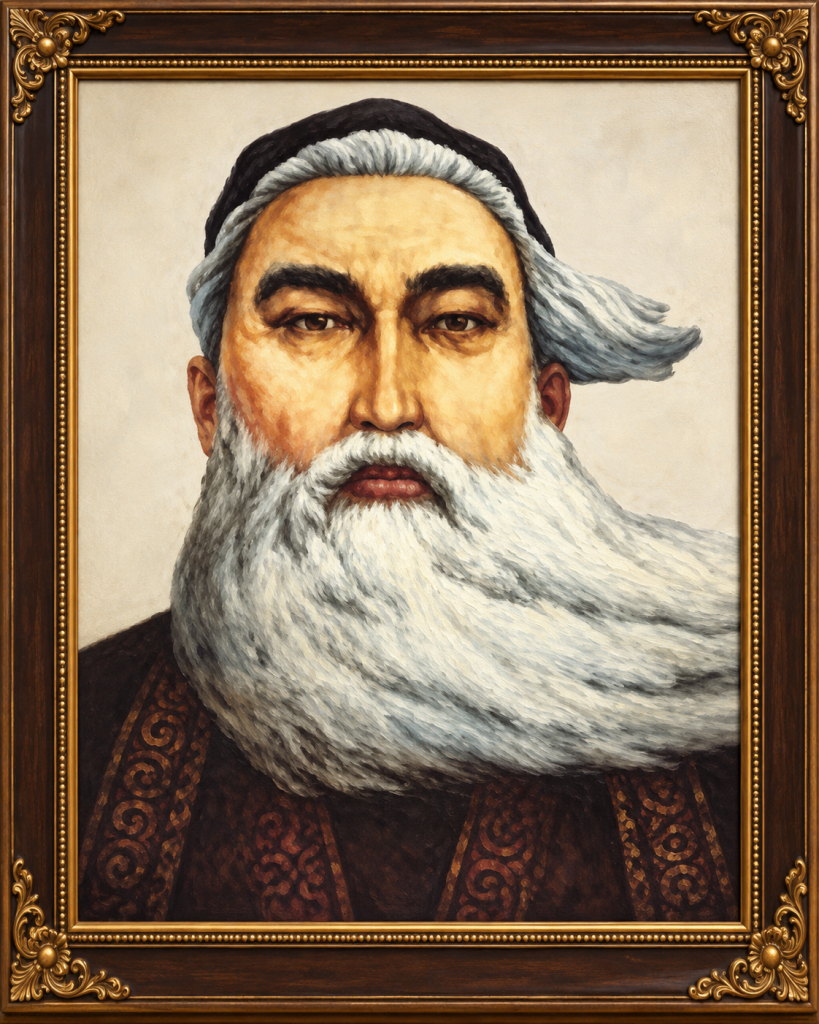
Kurmangazy Sagyrbayuly (1823–1896) was a classical Kazakh kuyshi and composer and a master of the tokpe küy tradition. He was born in the settlement of Zhideli in what is now Zhangala District, West Kazakhstan Region. Kurmangazy was introduced to the art of kuy by the renowned kuyshi Uzak, who became his teacher and mentor.
Among Kurmangazy’s best-known compositions are Saryarka, Adai, Kishkentai, Balbyraun, and Turmeden Qashqan. These works have become enduring expressions of the strength, determination, and perseverance of the Kazakh people. Today, Kurmangazy’s music is performed not only in Kazakhstan but also internationally, and his name has been given to the Kazakh National Folk Instruments Orchestra. His artistic legacy holds a special place in Kazakhstan’s cultural heritage, and his contribution to the development of Kazakh national music is immeasurable.


1. Kurmangazy Sagyrbayuly — “Adai” Kui
2. Kurmangazy’s Kui “Saryarka” — Kurmangazy Folk Instruments Orchestra
3. Kurmangazy’s Kui “Sarykol – Samar” — Yermek Kaziyev (1991)
4. Kurmangazy’s Kui “Baizhұma” — Okap Kabigozhin (1937)
5. Kurmangazy’s Kui “Buktim, Buktim” — Shamil Abiltayev (1970)
6. Kurmangazy’s Kui “Balkaymak” — Azidolla Yeskaliyev (1972)