
DINA NURPEISOVA’S DOMBYRA
Описание
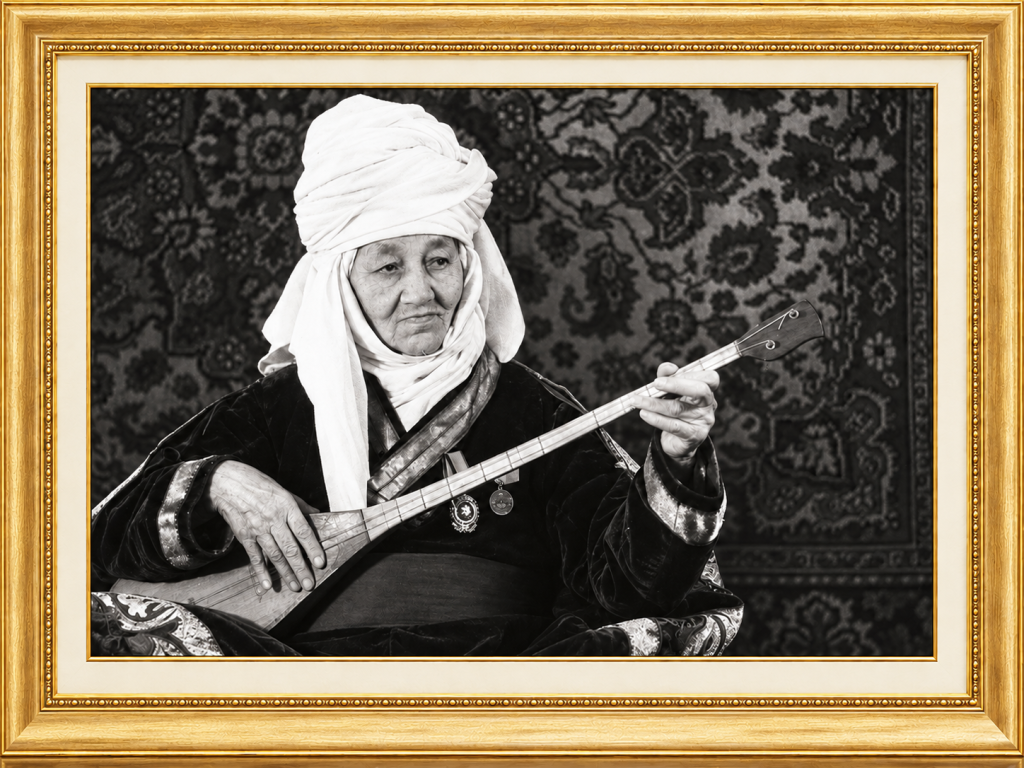
People’s Artist of Kazakhstan, kuishi -composer
Master craftsman: Medet Tolegenov
The original of this dombra was donated to the museum collection by Bolat Sarybayev in 1980, when the Ykylas Museum was established.
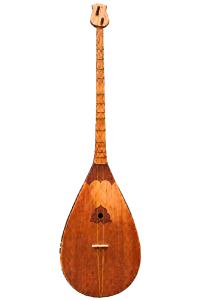 During the years of the Great Patriotic War, Dina Nurpeisova, known as the “Mother of Kuy,” stayed for some time at the home of Shamgali Kharesuly Sarybayev, a renowned educator and one of the founders of the Abai Kazakh Pedagogical Institute. Noticing the exceptional interest in music and remarkable talent of Shamgali Sarybayev’s son, Bolat, the great kuyshi was pleased and said to him: “My dear Bolat, keep this dombra and learn to play it. This dombra is the most precious thing I have in my life. Look after it as you would your own eyes.” With these words and her blessing, Dina presented the instrument to Bolat Sarybayev.
Bolat Sarybayev faithfully preserved this precious gift throughout his life. Dina’s blessing remained deeply engraved in his memory and inspired him to devote his life to collecting Kazakh musical instruments and studying the country’s musical heritage, including its traditions of song and kuy. This particular dombra was specially made for Dina Nurpeisova in 1939 by the renowned master craftsman Arystan Yermekov.
If the great Kazakh küyshi Kurmangazy is known as the “Father of Küy,” his disciple Dina Nurpeisova is revered as the “Mother of Küy.” From an early age, she performed compositions by renowned kuyshis and later began composing her own works. She was eventually awarded the honorary title of People’s Artist of Kazakhstan.
Dina Kenzhekyzy Nurpeisova was born in 1861 in the Narynkum area of what is now Zhangala District, West Kazakhstan Region. From a young age, Dina performed the kuy compositions of such renowned masters as Dauletkerey, Musirali, Alikey, Turkesh, Uzak, Yesszhan, Baizhuma, and Balamaisan with exceptional skill and expressiveness. People in her community began referring to her as the “dombra-playing girl.” Her father was also a well-known dombra player, and from the age of eight he began teaching his daughter the intricacies of the art.
It was around this time that Dina first met the great kuyshi Kurmangazy. At the age of eight or nine, Dina not only learned her teacher’s compositions but also absorbed the distinctive features of his performance style and continued his artistic and musical tradition.
In 1937, Dina Nurpeisova took part in the Republican Competition of Folk Performers. At the age of 75, she participated in the All-Union Competition of National Instrumental Performers held in Moscow, where she won first place. She was also selected as one of the nine outstanding performers from among 2,000 participants.
Later, in 1944, at the age of 83, Dina performed at the Third Ten-Day Festival of Music of the Central Asian Republics, held in Tashkent. In the same year, she was awarded the honorary title of People’s Artist of the Kazakh SSR.
Dina’s compositions Bulbul, Baizhuma, and Kogentup clearly reflect the traditional küy heritage of the Kazakh people. Her composition 1916 Zhyl (“The Year 1916”), dedicated to the events of 1916, reveals the influence of Kurmangazy’s Kishkentai, which he dedicated to the historical figures Isatay and Makhambet. Through her compositions and performance, Dina Nurpeisova preserved and developed the rich tradition of Kazakh instrumental music, becoming one of the most significant figures in the history of Kazakh kuy.


1. Mamen’s Kui “Aksholpan” — Dina Nurpeisova (1950)
2. Kui “Zhiger” — Dina Nurpeisova (1950)
3. Kui “Kogentup” — Dina Nurpeisova (1950)
4. Kui “Domalatpai” — Dina Nurpeisova (1950)
5.Kurmangazy’s Kui “Kairan Sheshem” — Dina Nurpeisova (1950)
6. Kui “Kosalka” — Dina Nurpeisova (1950)
7. Kui “On Altynshy Zhyl” — Dina Nurpeisova (1950)